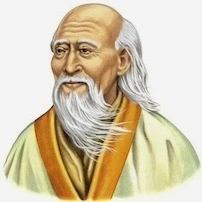
A journey of a thousand miles begins with a single step— Lao Tzu
Lao Tzu
571 BC - 471 BC
Chinese Philosopher
Lao Tzu was an ancient Chinese philosopher and the legendary founder of Taoism. Traditionally said to have lived in the 6th century BCE as a royal archivist for the Zhou court, he is credited with writing the foundational text of Taoism, the Tao Te Ching.
100Quotes
239Topics
100Wallpapers
0Downloads
Featured Quote










About Lao Tzu
Lao Tzu was an ancient Chinese philosopher and the legendary founder of Taoism. Traditionally said to have lived in the 6th century BCE as a royal archivist for the Zhou court, he is credited with writing the foundational text of Taoism, the Tao Te Ching.
Notable Works
Lao Tzu’s foundational legacy is anchored by the Tao Te Ching, a premier philosophical masterpiece outlining the concept of the Tao and the virtue of effortless action (wu wei). His teachings are further expanded in the Hua Hu Ching, a text detailing the transformation of ego and the path to ultimate spiritual liberation. In the Wen-Tzu, his classic dialogues serve as a practical guide to governance and alignment with natural laws. His esoteric and mystical philosophy is preserved in the Ching Chang Ching (Classic of Purity), while the Qingjing Jing outlines the essential practices for cultivating inner stillness, clarity, and harmony with the universe.